




Contents
Tags
Share:


Two recent incidents show why the tools your IT provider uses are a target, and what to ask them.
Managed service providers (MSPs) look after IT for thousands of businesses, and attackers have noticed. In the past six weeks, two widely used MSP platforms have been hit: a cloud backup service that protects Microsoft 365 data, and a remote monitoring and management platform. Neither story is about a single business. Both are about the tools that reach into many businesses at once.
The short version: MSP tools have deep access by design, so they're valuable targets. Vulnerabilities are being found faster than most organisations can fix them. Vulnerability management is no longer optional, and it's worth asking your IT provider how they handle it.
What happened
ConnectWise Cloud Backup (formerly SkyKick), October
On 15 October, attackers used ConnectWise Cloud Backup (formerly SkyKick) application credentials to sign in to customers' Microsoft 365 environments. MSPs use the service to back up their clients' Microsoft 365 data.
Because the sign-ins came from the backup application itself, they didn't need a user's password or a multi-factor prompt. Backup tools need broad access to read and restore data, which is exactly what made the credentials so valuable. The security firm Huntress, which first reported the activity, said the sign-ins moved from one customer to the next a few seconds apart, which points to an automated script.
ConnectWise disabled the affected application identities and suspended Cloud Backup and related services on 17 October. Huntress confirmed at least 162 compromised tenants; later reports put the figure higher, and the total remains unclear. ConnectWise said it had no evidence that backup archives were accessed.
N-able N-central, November
On 9 November, N-able took its hosted N-central platform offline worldwide after a researcher published details and proof-of-concept code for 33 alleged vulnerabilities. N-central is a remote monitoring and management platform that MSPs use to look after their customers' devices, which is why access to it is so valuable to attackers.
N-able released an emergency hotfix on 10 November that fixes seven published vulnerabilities, and hosted servers were brought back online the same day. N-able said it had seen scanning activity linked to the published exploit code and has promised further security updates. The incident follows an authentication bypass issue reported in August.
Why MSPs are in the firing line
One compromise can reach many customers. MSP tools require deep access to manage devices, read data, and restore backups, making them a better target than any single business.
It's also worth noticing what these incidents weren't. They weren't caused by weak passwords at the businesses affected. One was a stolen application credential, and the other was a set of flaws in a management platform. Good habits inside your own business can't fully protect you from a weakness in a supplier's tools.
Where this is heading
Last month, OpenAI's chief executive, Sam Altman, told an audience at Stanford that he no longer believes organisations can simply patch every bug. He pointed to two causes: AI models keep finding flaws faster, and many organisations have acted too slowly.
Microsoft's 2026 Digital Defence Report says organisations should prepare for "a multi-year period where the number of known but unpatched vulnerabilities spikes", and that AI has "compressed the security cycle from days to minutes".
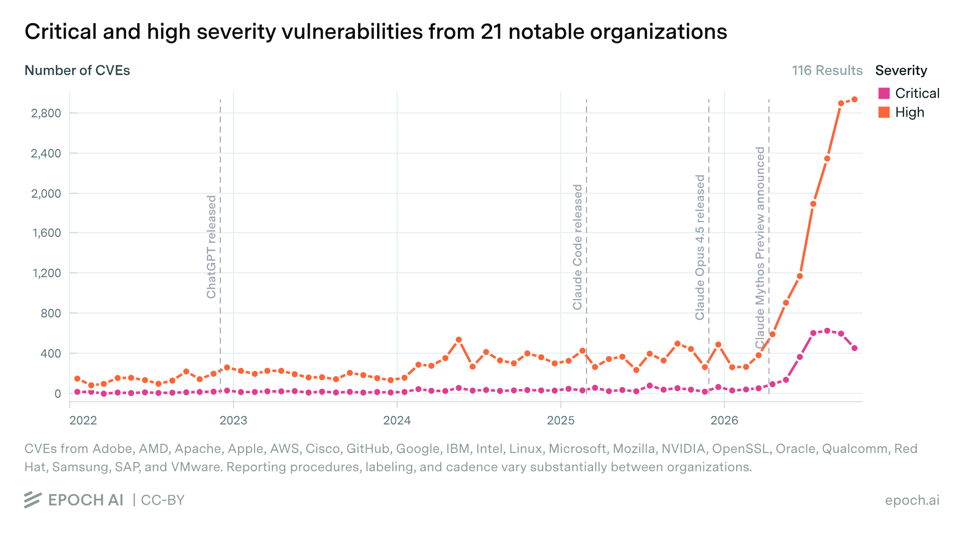
The takeaway is simple. Vulnerability management is no longer an optional extra, and patching when a headline appears isn't enough. It needs to be continuous: know what you have, prioritise what matters, fix it quickly, and check that the fix worked.
What to ask your MSP
- Which tools do you use to manage our systems, and what access do they have?
- How do you secure your own tools, and how would you tell us if a supplier was breached?
- How quickly do you patch critical vulnerabilities, and can you show us?
- Do you regularly review the third-party apps connected to our Microsoft 365 and remove the ones we don't need?
- Are you independently certified, for example to ISO 27001 or Cyber Essentials Plus?
Where Evo Plus fits
Evo Plus is our most advanced fully managed package, designed for businesses that want enterprise-level security, with built-in vulnerability management and Cyber Essentials Plus support. [CONFIRM EXACT INCLUSIONS BEFORE PUBLISHING.]
If you'd like to see what that would mean for your business, book a meeting with an expert. No jargon, no scare tactics, just a straight answer.
Three things to do this week
- Review the apps connected to your Microsoft 365 and remove any you no longer use. If you don't actively use ConnectWise Cloud Backup or SkyKick, remove their permissions.
- Ask your MSP the five questions above, and keep the answers.
- Check how critical patches are tracked and reported, so you can see how quickly they're applied.
Frequently asked questions (FAQs)
-
What happened in the ConnectWise SkyKick breach? On 15 October 2026, attackers used ConnectWise Cloud Backup (formerly SkyKick) application credentials to sign in to customers' Microsoft 365 environments. ConnectWise disabled the affected applications on 17 October.
-
What is N-central, and why was it shut down? N-central is a remote monitoring and management platform used by MSPs. N-able took its hosted service offline on 9 November after a researcher published details of 33 alleged vulnerabilities, and released an emergency hotfix the next day.
-
Why are MSPs targeted by attackers? MSP tools have deep access to many customers' systems and data, so a single compromise can affect many businesses.
-
What is vulnerability management? A continuous process of finding, prioritising and fixing weaknesses in your systems, and checking that the fixes worked, rather than patching occasionally.
-
Is my data at risk if my MSP is breached? It can be, depending on what access the affected tool had. Ask your MSP which tools they use, what access they have, and how they would notify you if something went wrong.

Nobody can promise their tools will never be targeted, but how a provider prepares and responds is what counts. A few direct questions will tell you a lot about whom you're trusting.
If you'd like a straight answer on how we handle this, we're always happy to talk things through.